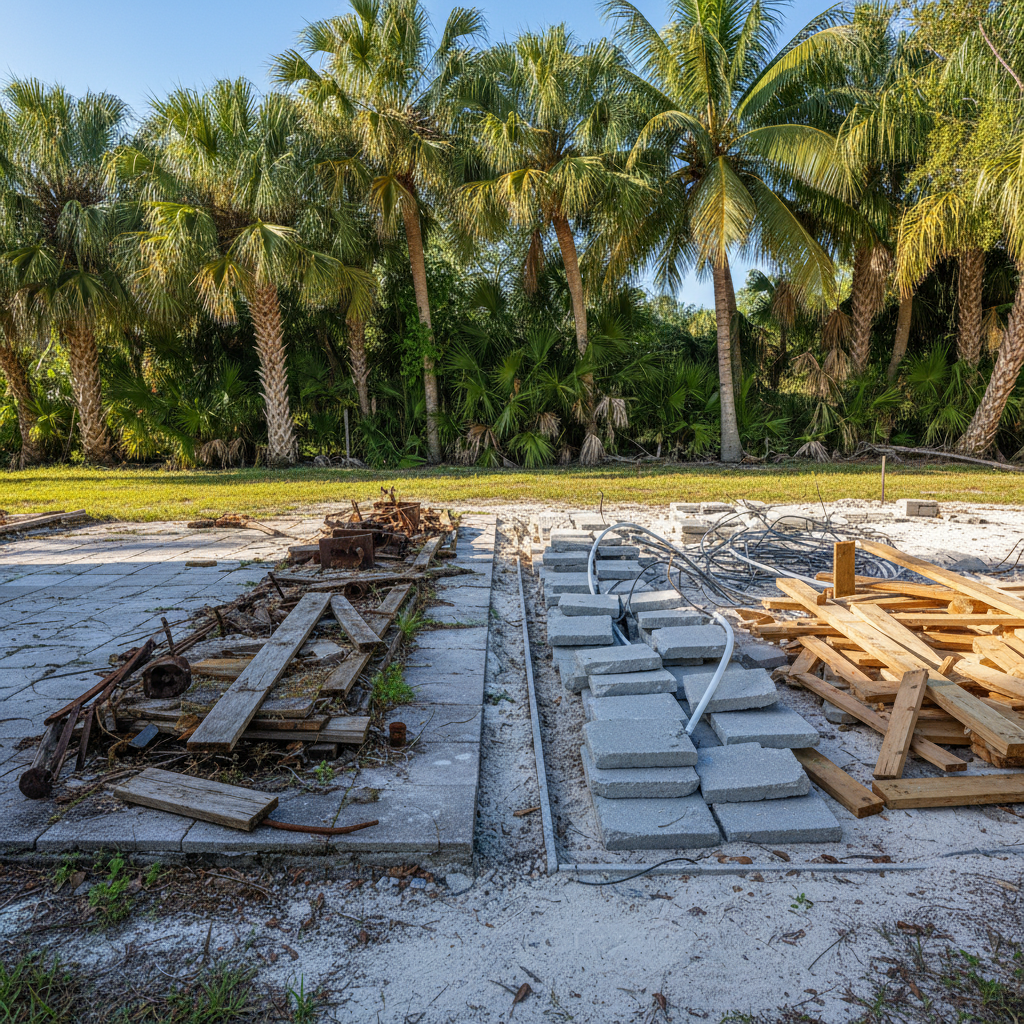
Got a section of your home giving you trouble? Maybe it's a porch that's seen better days, a foundation wall starting to crumble, or an interior partition damaged by water. When you're looking at a partial demolition job, it usually comes down to two main choices: fixing what's there or ripping it out and starting fresh. I've seen both approaches used here in Port Richey, and honestly, each has its place. Let's talk about what you really need to think about before you decide.
Repairing Existing Structures: The Patch-Up Job
Repairing means you're trying to save the original. You might be shoring up a weak beam, filling a crack in a concrete slab, or swapping out a few rotted studs in a wall. This often sounds like the easier route because it feels less drastic, and sometimes, it can be quicker and cheaper at first glance.
- Cost: Usually, repairing costs less upfront. You're buying fewer new materials and paying less for removal labor. But hold on, this isn't always true. If the damage is extensive, or if the repair needs special skills, those costs can shoot up fast. Think about a crack in your foundation – a simple epoxy injection is one thing, but if it's a structural problem that means underpinning, that's a whole different ballgame.
- Durability: Here's where you really need to be careful. A good repair, done correctly, can last for ages. But if you're just patching a symptom without getting to the root cause, you'll be right back where you started pretty quickly. For example, if you're fixing a wall section that's been damaged by constant moisture, and you don't stop the leak, you're just putting off the inevitable.
- Maintenance: Sometimes, a repaired section might need more ongoing attention than a brand-new one. It's kind of like an old car – you fix one thing, and then something else pops up. You might find yourself doing touch-ups or keeping a closer watch on that area you repaired.
- Appearance: This can be hit or miss. A skilled repair can blend in perfectly, especially if it's an interior wall that's getting new sheetrock and paint. But for outside parts, like a stucco wall that's been patched, you might always see the seam, even with a good paint job. Matching old materials perfectly? That can be tough.
Replacing Structural Elements: The Fresh Start
This approach means taking out the damaged or failing section completely and building it back new. We're talking anything from removing and rebuilding a part of a load-bearing wall to tearing out an entire concrete patio and pouring a new one. It's a bigger project, no doubt, but sometimes, it's the only way to get a fix that actually lasts.
- Cost: Generally, replacing costs more upfront. You've got the demolition costs (that's where All Star Demolition comes in, just saying!), debris removal, and then the full price for new materials and construction. But here's the thing: this is often a one-time cost, not something you'll keep paying for.
- Durability: This is the huge advantage of replacement. When you rip out the old and put in new, you're starting with fresh materials, often built to today's codes and standards. That means you're getting maximum lifespan and reliability. You won't inherit the old structure's problems.
- Maintenance: New structures usually need less upkeep, at least for a good long while. You're getting a clean slate, so you won't be dealing with those lingering issues that often come with patching up old problems.
- Appearance: A new section, when it's put in right, can look amazing. It can even be a chance to make that part of your home look better or work better. You won't have to worry about mismatched textures or colors at all.
Which One Makes Sense for Port Richey Homes?
Here in Port Richey, we deal with a few things that really push me towards recommending replacement more often than not, especially for structural elements. Our subtropical climate means high humidity and heavy rains, which are just brutal on building materials. We also have sandy soils and a high water table, and those can put real stress on foundations and slabs over time.
If you've got wood rot from moisture, particularly in load-bearing walls or floor joists, trying to patch it often just leaves you with a mix of old, compromised wood and new wood. It's usually better to just remove the affected section entirely, deal with the moisture source, and rebuild with fresh, treated lumber. Same goes for concrete slabs or foundations cracking because of soil settlement or water issues. A patch might hold for a bit, sure, but if the underlying problem isn't fixed, and you're just putting a band-aid on it, that crack will probably reappear or new ones will form. What a pain!
My general rule of thumb? If the damage is minor, superficial, and clearly isolated, a repair might be a good option. But if it's structural, widespread, or caused by an ongoing issue like water intrusion or soil movement, you're almost always better off with a full replacement of that section. It costs more upfront, absolutely, but it saves you headaches, money, and worry down the line. You'll get a more durable, reliable, and often better-looking result that you won't have to think about again for decades.
Don't just jump into the cheapest option without thinking about the long game. Get a few opinions, and make sure whoever you hire is looking at the whole picture, not just the surface problem. It's your home, after all, and you want it to be solid.