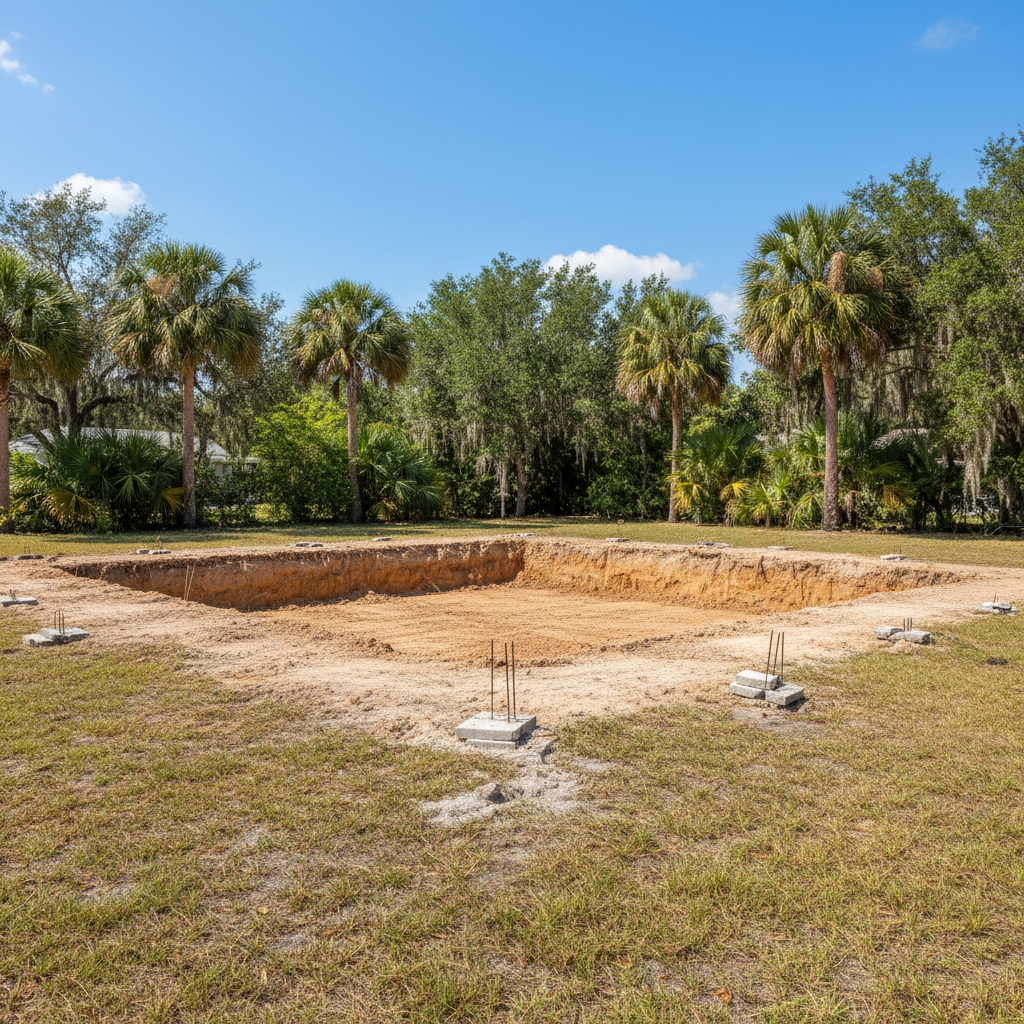
Alright, let's talk about dirt. Specifically, moving it. If you're planning something big here in Port Richey — maybe a new home, a sparkling pool, a septic system, or even just some serious landscaping — you're definitely going to need excavation. And if you're like most people, you're probably wondering what that's actually going to cost you, right? I'm not going to give you some vague 'it depends' answer; instead, we're going to get into some real numbers and what you really need to look out for.
What Really Drives Excavation Prices?
A lot of things can make the price of moving dirt jump around. It's not just about how big the hole is, believe it or not. Here's what I've seen impact costs the most:
-
Soil Type: This is a big one, especially around here in Port Richey. We've got a real mix of sandy soil, which is usually easier to dig, but also areas with stubborn clay or even solid limestone. Sandy soil can be as low as $45-$85 per cubic yard to dig up. Clay can push that price to $65-$130 per cubic yard, and if you hit rock, you're looking at $100-$220 per cubic yard. Sometimes it's even more if specialized equipment, like a breaker, is needed. I've personally seen projects right here in Port Richey where what looked like a simple dig turned into a rock-breaking marathon, which added significant time and, naturally, cost.
-
Site Accessibility: Can a big excavator and dump trucks easily get to where they need to dig? This really matters. If we have to squeeze through tight spaces, deal with existing structures, or work with limited access, it just takes more time. Plus, it might mean we need smaller, more expensive equipment. Urban settings or properties with steep grades always cost more, generally speaking.
-
Depth and Volume: This one's pretty obvious, but it's still worth mentioning. The deeper and wider the excavation, the more material needs to be moved, and the more it's going to cost. Excavation costs typically range from $50 to $150 per cubic yard across South Florida, with most projects averaging $75 to $100 per cubic yard.
-
Water Table: We're in Florida, after all, so high water tables are a very real thing. If we hit water during excavation, we might need dewatering solutions. This can add anywhere from $5,000 to $20,000 to a foundation excavation project. This isn't just an extra step; it's really important to prevent future foundation problems, which nobody wants.
-
Underground Utilities & Obstacles: Hitting a hidden utility line or an old foundation can be a real nightmare. It's why we always stress calling 811 before digging — something everyone should do. Encountering unexpected obstacles means delays and extra costs for careful removal or rerouting.
-
Disposal: Once the dirt's out of the ground, it has to go somewhere. Hauling and disposal fees can run you $10-$40 per cubic yard, depending on the distance and if the material needs any special handling.
-
Permits and Fees: Don't forget all the paperwork. Most cities and counties in Florida, including Port Richey, require building permits for any structural work. Permit fees can range from $100 to $10,000+, depending on the project's size. You'll also need to factor in things like soil testing, which can run $710 to $2,240.
Typical Cost Ranges for Common Port Richey Projects
Here's a breakdown to give you a more concrete idea of what to expect:
-
Small Excavation Jobs (e.g., small trenching for utilities, minor grading): For something like a small trench, you might see costs from $500 to $1,200. Hourly rates for an excavator and operator typically run $100-$300 per hour.
-
Foundation Excavation (for a new home): This is a bigger job, obviously. For a typical custom home foundation, expect to pay anywhere from $25,000 to $75,000. For a smaller foundation pad, you might see $1,500-$10,000.
-
Pool Excavation: Digging out for a new in-ground pool usually runs $1,000-$5,000. It's a pretty standard job for us.
-
Land Clearing (per acre): If you're starting with an overgrown lot, land clearing costs in Florida typically range from $1,500 to $6,000 per acre for most residential projects. Heavily wooded areas with large trees and stumps can push that to $6,000-$15,000+ per acre. For a typical residential lot (0.25 to 0.5 acres), expect $3,000 to $8,000 for complete clearing, including stump removal and rough grading.
-
Septic System Excavation: The excavation and site prep for a septic system can be $1,000-$4,000, not including the tank or drainfield installation. The overall installation of a septic system in Port Richey can range from $3,646 to $5,209, but could go up to $9,143 depending on size and complexity.
-
Drainage Systems (e.g., French drains): A French drain in Florida costs $25-$60 per linear foot installed. For a typical 50-100 foot residential system, that's $2,000-$6,000 for materials and labor. Add engineering and permits, and you're looking at $5,000-$14,000.
What Should Be Included in Your Quote?
When you get a quote from All Star Demolition or any other reliable company, make sure it's clear and covers these points:
-
Scope of Work: Exactly what are they digging? How deep? How wide? What are the finished grades? You need these details.
-
Material Removal & Disposal: Does the price include hauling away all excavated material? Where is it going? Are there separate fees for contaminated soil if that's a risk? This is an important question.
-
Equipment & Labor: This should cover the machinery, fuel, and the crew's time. Some contractors charge by the cubic yard, others by the hour, or a flat project fee.
-
Site Preparation: Does it include any necessary clearing before digging, like brush or small trees? Sometimes this gets overlooked.
-
Backfill & Compaction: If part of the job involves filling a trench or around a foundation, is the cost of the fill material and compaction included? Make sure this is clear.
-
Permits & Inspections: While you often pull the main building permit, the excavator should coordinate their work to pass inspections and may handle specific permits related to their scope. Make sure you understand who is responsible for what.
-
Insurance: A good contractor will be fully insured. Don't work with anyone who isn't; it's just not worth the risk.
How to Avoid Overpaying for Excavation
Nobody wants to get ripped off. Honestly, here's how you can protect your wallet:
-
Get Multiple Quotes: This is a no-brainer. Always get at least three detailed quotes. It helps you compare apples to apples.
-
Be Specific About Your Project: The more information you can give a contractor upfront, the more accurate their bid will be. Provide site plans, desired depths, and talk about any concerns you have about the soil or access.
-
Understand the Soil: If you're building, a geotechnical report (soil test) is really valuable. It tells you exactly what's under the surface, which helps contractors give you a precise bid and avoids nasty surprises later on.
-
Check References & Licenses: Make sure your contractor is licensed and insured. Ask for references and check out their past work. You don't want someone learning on your dime, after all.
-
Read the Contract Carefully: Don't just skim it. Understand every line item. If something's unclear, ask. Make sure it specifies what happens if unexpected conditions (like rock or water) are encountered. Also, be aware of Florida's lien laws to avoid paying twice.
-
Plan Ahead: Rushing a project often leads to higher costs. Give your contractor enough lead time and make sure all necessary permits are in place before work begins.
Excavation is a foundational part of almost any construction project. Doing your homework and working with a reliable, experienced local team like All Star Demolition will save you headaches and money in the long run. Don't just hire the cheapest guy with a shovel; hire the one who knows what they're doing and can prove it.