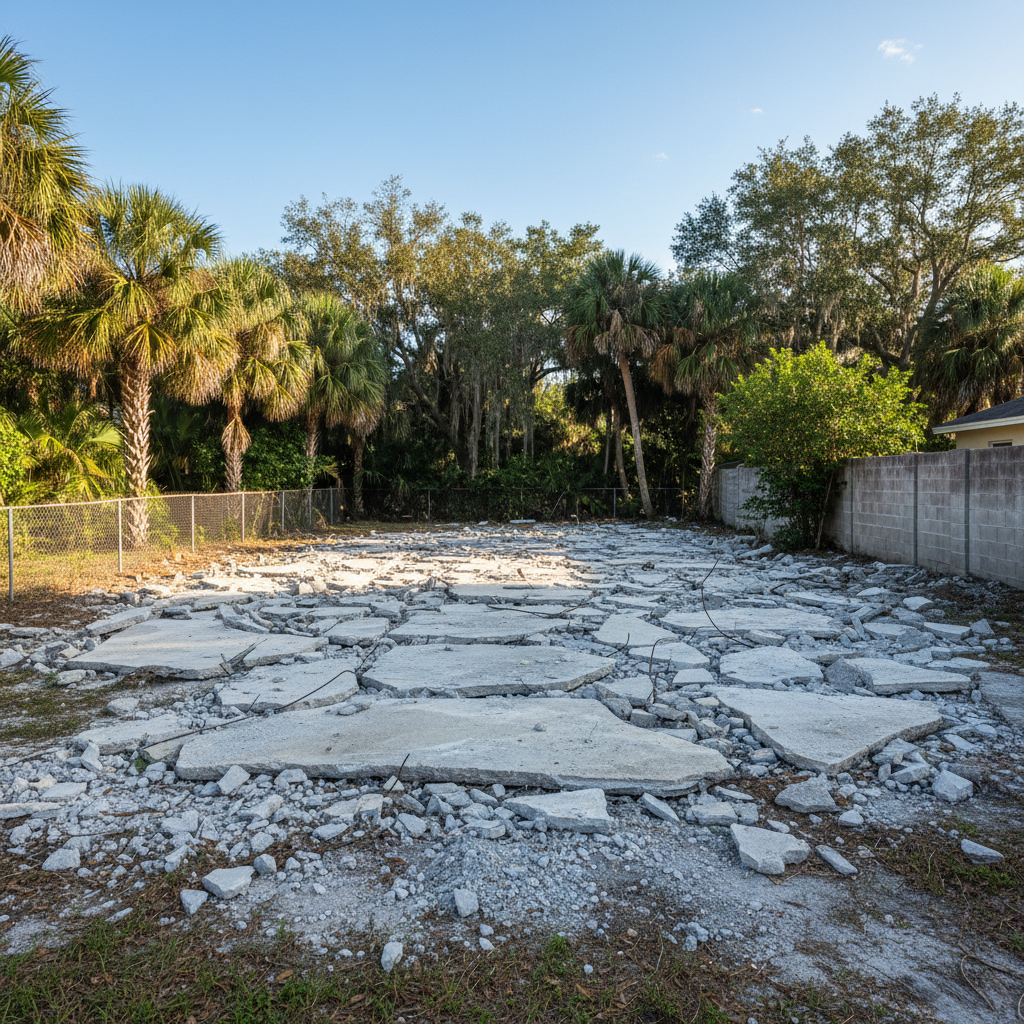
So, you've got some concrete on your Port Richey property that needs to go. Maybe it's an old, cracked driveway, a patio that's seen better days, or even a slab for a shed you're finally getting rid of. Whatever the reason, getting rid of concrete isn't just about swinging a sledgehammer, you know. It's a whole process, and if you're a homeowner, you really want to make sure you're doing it right. I've seen plenty of projects over the years, and honestly, a little planning goes a long way.
Understanding Your Project Timeline
Let's talk about how long this whole thing is going to take. A lot of folks think concrete demolition is a one-day job, but that's rarely the case. For a typical residential concrete removal – think a patio, a walkway, or even a driveway – you're usually looking at one to three days just for the removal itself. If it's a bigger, more complex slab, especially one with a lot of reinforcement, it could stretch to four to seven days. That's a bit more involved.
Now, that's just the demolition part, which is only one piece of the puzzle. If you're planning to replace the concrete or do other work, the whole project, from removal to base prep and pouring new concrete, can take a week or more. It really adds up.
Here's a rough breakdown of the phases:
- Planning and Permits: This is where you get all your ducks in a row. It can take anywhere from a few days to several weeks, depending on how complex your project is and how fast the city moves. You'll need permits for demolition in Port Richey, and you'll definitely need to make sure utilities are disconnected. This is a key step.
- Site Preparation: Clearing the area, setting up safety zones, and protecting nearby landscaping. This might take a few days.
- Actual Demolition: This is the noisy part. For a typical residential concrete job, it could be anywhere from one to seven days, depending on the size and thickness.
- Debris Removal and Cleanup: Once the concrete's broken up, it needs to be hauled away. This can take a few days to a week, sometimes even longer than the actual demolition, especially for bigger jobs.
- Final Inspection: Some jurisdictions require a final inspection to close out the permit.
Remember, things like the thickness of the concrete, whether it has rebar, and how easy it is for equipment to access the area all play a role in the timeline. These details really matter.
What to Expect During the Process
When the crew from All Star Demolition shows up, or any other reputable company, here's what you can generally expect:
- Site Assessment: Before any work starts, we'll do a thorough check. We're looking at the size and thickness of the concrete, checking for any rebar, and marking out utility lines. This is super important, especially in older Port Richey neighborhoods where utility maps might not be perfectly updated.
- Preparation and Protection: We'll secure the work area, put up barriers, and take steps to protect your landscaping and any nearby structures. We'll also set up dust control measures. You should also close windows and doors facing the work area to keep dust out of your house.
- Breaking the Concrete: This is the main event. We use specialized equipment, like hydraulic breakers for thick slabs or jackhammers for more confined spaces. It's going to be loud, dusty, and there will be vibrations.
- Debris Removal: Once the concrete is broken into manageable pieces, we load it up and haul it off. We try to recycle as much as we can, which is good for everyone.
- Site Cleanup: After the concrete is gone, we'll clean up the area, leaving it tidy and ready for whatever your next project is.
One thing to keep in mind, especially here in Port Richey, is our sandy, often high-water-table soil. This means proper site preparation and careful equipment operation are important to prevent ground instability. A good contractor will know how to handle this so you don't end up with settlement issues later on.
How to Prepare Your Property
You've got a role to play too! Here's how you can get your property ready for concrete demolition:
- Clear the Area: Move anything that's in the way or could get damaged. This means outdoor furniture, vehicles, planters, grills – anything. If you can't move it, cover it well with plastic sheeting.
- Trim Vegetation: Cut back any overhanging branches or bushes that are close to the demolition site.
- Talk to Your Neighbors: Give them a heads-up about the project, especially about the noise and dust. A little courtesy goes a long way.
- Secure Pets: Demolition is noisy and can be stressful for animals. Make sure your pets are in a safe, quiet place, or arrange for them to be elsewhere during the loudest parts of the work.
- Protect Other Hardscaping: If your concrete meets pavers, stone borders, or other elements you want to keep, point these out to your contractor. They can saw-cut or chip carefully to protect them.
- Mark Utilities: While your contractor will verify, it's always good to point out any known underground utilities like sprinkler lines or septic systems.
Questions to Ask Before Signing a Contract
Before you commit to anyone, you need to ask the right questions. This isn't just about getting the cheapest price; it's about getting the job done right and safely. Here's what I'd want to know:
- Are you licensed and insured in Florida? This is non-negotiable. Ask to see proof of their state or county contractor license, general liability insurance, and worker's compensation coverage. If they can't provide it, walk away.
- Do you handle permits and utility disconnections? A good contractor will take care of all the necessary permits from Pasco County and coordinate with utility companies to make sure everything is safely disconnected before work begins.
- What's included in your estimate? Get a detailed breakdown. It should cover labor, permit fees, equipment, fuel, debris removal, hauling, and final site prep. A vague quote often leads to surprise charges.
- How long will the job take, and what factors could cause delays? They should be able to give you a realistic timeline and explain what might push it back, like weather or unexpected underground issues.
- How do you protect my property and my neighbor's property? Ask about their plan for dust control, protecting landscaping, and preventing damage to adjacent structures.
- What's your plan for debris disposal? Responsible contractors will tell you how they'll sort and dispose of the concrete, and if they recycle.
- Can you provide references or show me examples of similar projects? Look at their past work and talk to previous clients.
- How much experience do you have with residential concrete demolition in Port Richey specifically? Local experience matters. Contractors familiar with our area understand the unique soil conditions and local regulations.
Asking these questions helps you vet contractors and makes sure you're working with a professional who knows what they're doing. Demolishing concrete is a big job, but with the right planning and the right team, it doesn't have to be a headache. Honestly, it can go pretty smoothly.